
Midweek Study - Ki Tavo - The Land Remembers
כִּי־תָבוֹא — KI TAVO
When you come. When you enter. When you arrive.
This season makes arrival visible. Children return to school carrying backpacks and possibility. Political signs rise, promises sharpen, and we are reminded that politics never remains theater for long; eventually it becomes somebody’s classroom, paycheck, hospital, border, or table. Decisions eventually arrive somewhere.
Ki Tavo speaks directly into that moment. Moses does not merely teach Israel how to enter the land. He teaches them how to live once the land receives them. Bring the first fruits. Tell the story. Remember Egypt. Feed the stranger. Possession does not cancel obligation. It deepens it.
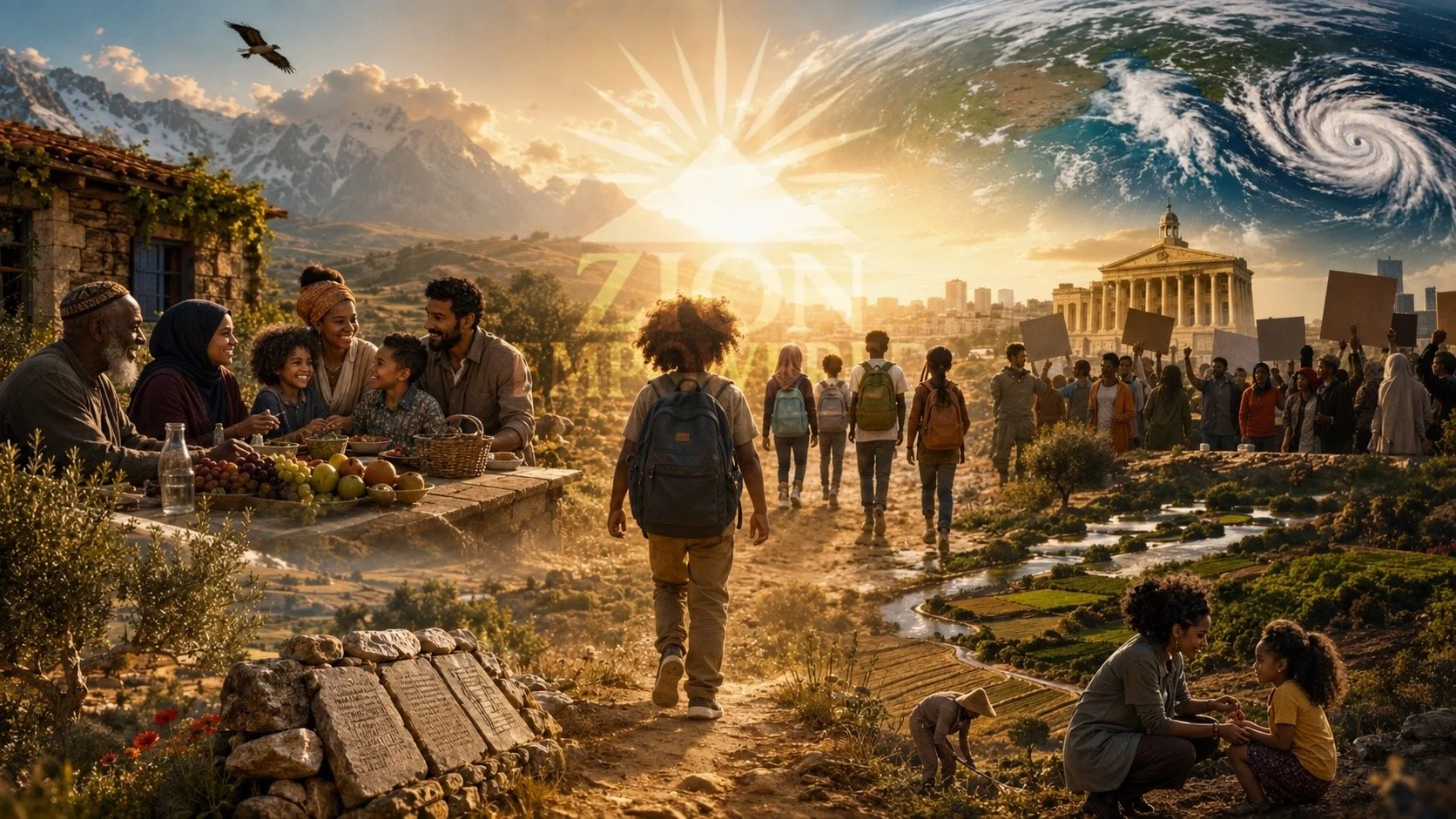
Torah does not reduce the land to simply “property”. Land carries memory. It remembers the hands that worked it, the prayers spoken over it, the suffering endured upon it, and the kind of people we became while standing there. Modern life asks: What is this place worth? Torah asks the harder question: What does living here require of you?
An old village may understand this better than a new subdivision. A house can hold more than walls. A grandfather laid the stone. A mother planted the garden. Generations ate at the same table. And sometimes a soul can travel the world, learn other streets and languages, then return for a small season to the distant land of its beginning and discover that memory recognized the road before the mind did.
Even creation teaches this. A distant El Niño can alter rain, wind, harvest, and winter thousands of miles away. Human decisions travel the same way. Mercy travels. Cruelty travels. Sacrifice travels. Policy travels. Nothing we do stays only where we did it.
That is why Israel must remember. When the basket is full, Moses does not allow the story to begin with abundance. It begins: “My ancestor was a wandering Aramean.” Before land, wandering. Before possession, dependence. Before becoming hosts, strangers. The fruit comes from the soil, but the testimony comes from memory. Torah demands both.
Then Deuteronomy 27 presses farther. When Israel crosses the Jordan, they raise stones and write Torah upon them clearly. Their first great marker in the land does not say, WE WON. It says, THIS IS HOW WE MUST LIVE NOW THAT WE ARE HERE. The stones do not glorify possession. They discipline it.
Sunday we said: When you arrive, open something. Tonight we add: When you inherit something, leave something worth inheriting. Do not merely leave the house; leave the story. Do not merely preserve the field; preserve the wisdom learned upon it. Do not merely send children into the future; give them something true enough to carry there. Do not merely vote for the world you want; remember that somebody else must live inside the consequences.
There is a poverty deeper than having little. We can inherit the house and lose the story. Inherit the church and lose the prayer. Inherit freedom and forget what bondage cost. Torah refuses that poverty.
Ki Tavo says: Bring the basket. Remember. Deuteronomy says: Raise the stones. Write. Together they declare: We do not inherit a place merely to possess it. We inherit it to remember, tend, and hand forward.
So as children return to classrooms, travelers find old roads again, politics begins shaping another season, and distant currents quietly alter the weather, Torah leaves us with one question:
What will the places we inhabit remember about us?
Midweek Study - Fear Buries, Faith Makes Room
Preamble:
We did not have Sunday Study this week, so tonight we are not picking up a thread from Sunday. We are beginning again. And maybe that is fitting.
Sometimes life gives you a little distance from the usual rhythm. You step into another city, another room, another family moment, and you are reminded that life keeps asking us the same question in different ways:
What are you going to do with what has been placed in your hands?
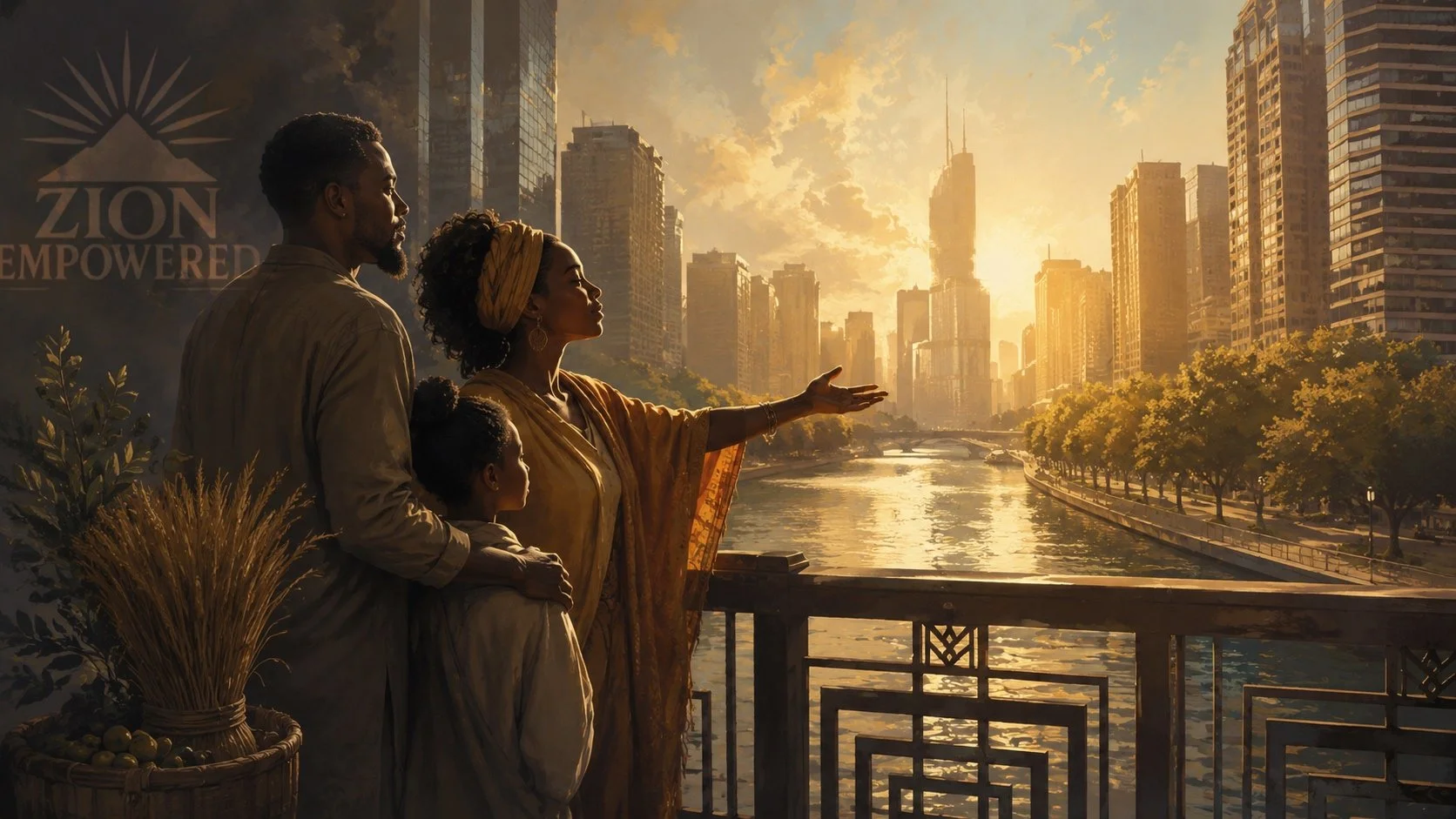
You can walk through a place where old stone stands beside new glass and see that nothing worth keeping survives by remaining exactly as it was. Somebody had to preserve what mattered and still make room for what was coming.
Covenant works that way too. Two lives do not become one because one disappears into the other. They stretch. Families stretch. Tables get longer. New names enter old stories. Love keeps what is precious, but it also makes room for what has not yet arrived.
That is where Torah meets us tonight.
A worker finishes the day and waits for wages. A widow needs protection. A stranger stands at the edge of somebody else's harvest. A sheaf gets left behind. A few olives remain on the branches.
And God says:
Leave them there.
Not because they have no value, but because they do.
Then Matthew gives us a man who receives something valuable and does the opposite. He becomes afraid, digs a hole, and buries it. When the master returns, he can say with complete accuracy:
Nothing is missing.
And somehow that is precisely the problem.
He preserved everything and multiplied nothing. He lost nothing, but nothing grew. Fear convinced him that keeping something untouched was the same thing as being faithful to it.
Then Isaiah speaks to people who know what loss feels like; people who have known empty places, broken expectations, and futures that did not turn out the way they imagined. And God does not tell them to build a smaller life so they will never be disappointed again.
God says:
Widen the tent.
Lengthen the cords.
Strengthen the stakes.
Fear not.
Matthew's frightened servant digs downward. Isaiah's wounded Zion stretches outward.
And standing between them is Torah whispering the word that keeps frightened people from turning survival into a fortress:
Remember.
Remember Egypt. Remember when somebody made room for you. Remember the table you did not set, the door you did not open, the grace you could not have earned.
Because perhaps the cure for a frightened hand is still a remembering heart.
And maybe faith is not merely believing that God will give us more. Maybe faith is trusting God enough to make room before more arrives.
Midweek Study - Shake Off The Dust
Preamble:
Sunday’s study did not happen the way we planned. I was away at the Teamsters National Black Caucus, surrounded by people whose work is rooted in a familiar question: How do we keep pursuing justice when the pressure is heavy, the choices are complicated, and sometimes even our own vision gets clouded?
So tonight I do not want to simply recreate Sunday on a Tuesday.
I want to let the Haftarah take us deeper.
Isaiah looks at Zion after humiliation, captivity, exhaustion, and loss and says:
“Awaken, awaken.”
Shake yourself from the dust.
Get up.
Put your strength back on.
Loose the bands from your neck.
That sounds like liberation.
But liberation does not automatically give us clear vision.
Sometimes we are tired.
Sometimes we are angry.
Sometimes the pressure of life narrows what we can see.
Sometimes the very struggle for justice can make us so certain of the righteousness of our cause that we stop examining the righteousness of our methods.
And Torah asks the harder question:
What kind of people will we become once the chains come off?
Deuteronomy does not simply tell Israel to enter the land. It tells them what must stand in the gates when they arrive:
Justice.
Not justice only when it favors us.
Not justice only when we have time for it.
Not justice only when the facts are easy to see.
Justice, justice you shall pursue.
And then Acts gives us Saul—a man who knows Torah, has been educated at the feet of Gamaliel, possesses extraordinary zeal, and is still capable of hurting people while completely convinced that God is on his side.
That may be the uncomfortable thread running through all three texts:
What happens when we are trying to do right, but our vision has become clouded?
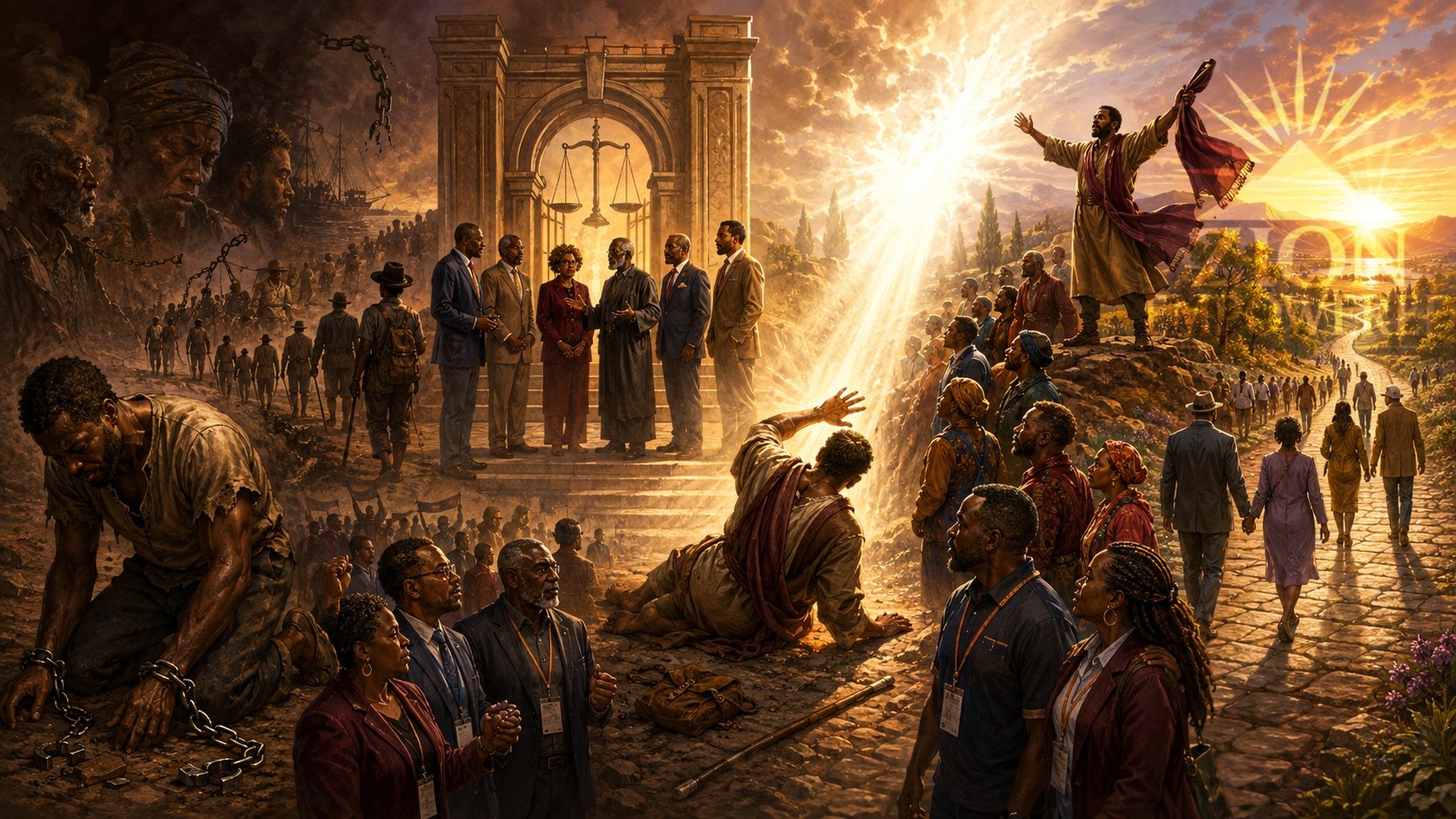
Zion is sitting in the dust.
Justice is standing at the gate.
Saul is lying on the road.
Three locations.
Three pressures.
Three reckonings.
And in every one of them, God is trying to get somebody up differently than they went down.